
What are ticks?

Ticks are tiny, blood-sucking parasites that can be found in grassy or wooded areas. They attach to animals or humans to feed on blood. They are arachnids related to spiders, with eight legs and no wings. This distinction is important for understanding how these vectors behave and how best to control them. There are many types of ticks, and they live in different parts of the world. The Caribbean region, including Jamaica, hosts several tick species important in both human and veterinary medicine because they can transmit pathogens that can cause several potentially serious diseases. "Grass lice", so called in Jamaica, are actually larval (baby) ticks.
What is the YAAD TICKS Programme?
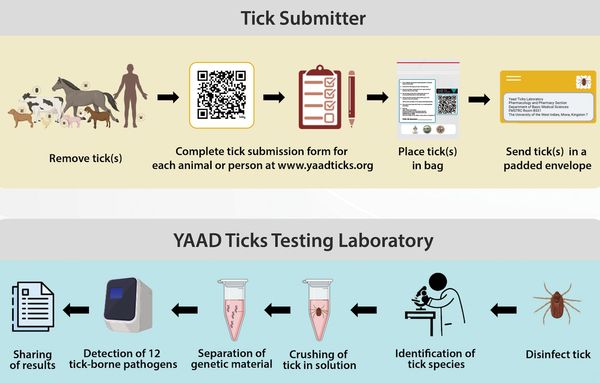
In Jamaica, we know very little about ticks and the disease-causing organisms they can carry. Researchers at The UWI Mona are working to learn more. Our goals include:
· Active and passive surveillance of ticks in Jamaica
· Identifying different tick pathogens and the germs they spread
· Checking if current tick control methods work
· Creating a tick map to show where ticks and diseases are found.
Why ticks matter?

Ticks are more than just a nuisance. Here in Jamaica, tick-borne diseases are common in dogs and also affect our livestock and horses. While such infections may seem to be rare in humans here, the potential for health impacts remain significant, especially with changing climate patterns, increased travel, and expanding tick habitats.
How can everyone in Jamaica help?

If you find a tick, send it to us for free testing!
YAAD TICKS Jamaica: Pick your Ticks, Send to Test, Know your Pest